Coast Road or Inland Lane? Two Ways to Shape a Day Out
Compare a coast road with an inland lane to plan a day out around the scenery, road conditions and places you can actually stop along the way.
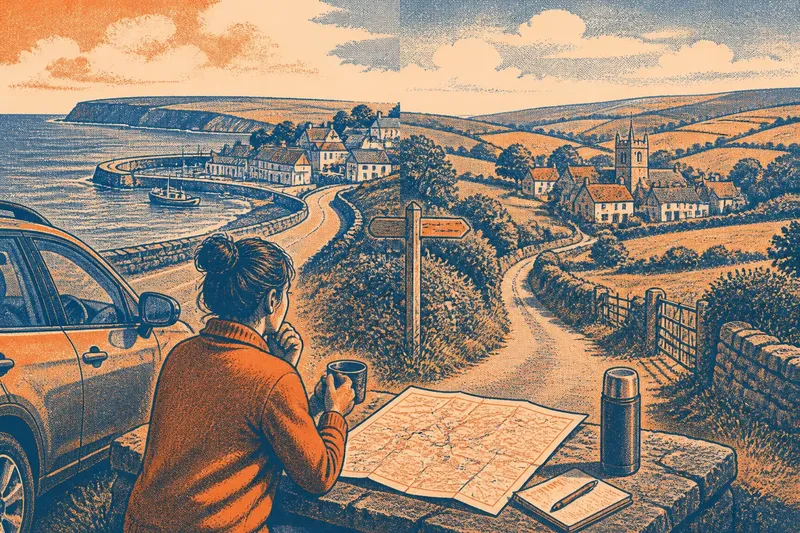
You have a free day, a paper map open beside your tea, and two possible routes across the same stretch of country. A coast road or inland lane can lead towards the same destination, but each changes what you notice: open water and headlands on one, field patterns and villages on the other.
The useful question is not which route is prettier. It is what each asks of the driver, what scenery it reveals, and whether its stopping places suit the time and conditions you have.
What will you see from the road?
A coast road often gives the landscape a clear edge: water beside the road, a harbour between buildings, then a headland as the route bends. The view can change dramatically, but trees, houses or traffic may interrupt it. A coastal label does not mean an uninterrupted panorama.
An inland lane brings the details closer. Hedges, stone walls, orchards and clustered houses reveal how fields and settlements fit the shape of the land. The scenery may be less open, but a bend or rise can expose a view that was hidden a moment earlier.
Choose the coast if being near the water is the main reason for the outing. Choose inland if you are curious about villages, field boundaries or the way a road follows a valley. This is a choice about the landscape you want to observe, not a promise that one route will be quieter or more beautiful.
What changes the driving experience?
A coastal road may pass through popular harbours or near beaches, where traffic and parking demand can build around familiar stopping places. An inland lane may be narrow, with bends, farm traffic or passing places that call for more attention. Neither setting is automatically easy to drive.
Before setting off, check a current map and local road or access notices. Note whether your intended stop is a public car park, a signed viewpoint or a place where stopping is permitted; do not assume that a gap beside the road is safe or available. The driver should keep attention on the road, leaving route changes and lookout duties to a passenger when possible.
If you are unsure whether a lane suits your vehicle or driving confidence, choose a more straightforward route or seek local guidance. A scenic detour is optional; a road that feels manageable matters more than reaching a particular viewpoint.
How should you choose your stops?
On the coast, likely stops may include a harbour, beach access or signed viewpoint. These are easy to recognise, but some may be busy or exposed to wind. Inland, a village café, public green or signed path can make a useful stop, though not every appealing lane or field edge is open to visitors.
Decide on a main stop before leaving, then treat other places as possibilities rather than obligations. Check opening information for a café or visitor site, and look for access signs before walking away from the road. A route is easier to enjoy when you know where you can stop legally and comfortably.
Not worth the effort: trying to stop at every viewpoint marked on a map. Some will be closed, crowded or poorly suited to your group; choosing one or two that match your purpose is more useful than collecting them all.
Which route fits your available time?
A map can make two roads look comparable while concealing slow bends, village traffic or detours to parking. Think about the time needed to drive, find a lawful stopping place and return, not just the line between two destinations. If the outing is short, favour the route with a clear main stop and a straightforward return.
Say you have an invented plan for an afternoon that starts late: you want a meal and one walk, and a village café on the inland lane has confirmed it will be open. You check the map, find a nearby signed public path, and choose that lane rather than adding a coastal detour. The resulting plan has a defined meal stop and walk; the trade-off is giving up the sea views, which is sensible if they are not the day’s priority.
With more time, you could take one route out and another back if they connect conveniently. First check road conditions and the extra driving involved; if the return becomes a rushed stretch, use the same route home instead.
What should you check before choosing a coast road or inland lane?
- Check the main attraction. If the sea is the point of the outing, choose the coast road; if villages or field patterns matter more, choose the inland lane.
- Check road access and notices. If your intended road is open and suitable for your vehicle, keep it as an option; if restrictions or uncertainty apply, use another route and follow local guidance.
- Check where stopping is permitted. If a signed public car park or viewpoint fits your plan, use it; if not, choose a different stop rather than pulling over somewhere unsafe or obstructive.
- Check the practical demands of the drive. If narrow lanes or bends would make the driver uncomfortable, select a more straightforward road; if the route feels manageable, continue with suitable care.
- Check the status of your intended destination. If the café or visitor site is open, keep it in the plan; if its status is unclear or it is closed, choose another confirmed stop.
- Check the forecast against the stop you want. If wind or rain would make an exposed coastal stop unpleasant, favour a sheltered village or postpone that stop; if conditions suit the coast, retain it as an option.
What should you ask before setting off?
Is a coastal drive always more scenic?
No. It may offer open water and headlands, but buildings, trees or traffic can obscure the view. Inland roads can reveal distinctive details in fields, villages and valleys.
Is an inland lane always quieter?
No. A village may be busy, and a narrow lane can feel demanding even with little traffic. Check the particular route and its stopping places rather than relying on the word “inland”.
Can you combine both routes in one outing?
Yes, if the roads connect conveniently and the extra driving still leaves time for your main stop. If the loop adds pressure or makes the return awkward, choose one route instead.
What if the weather changes?
Reconsider any exposed stop if wind or rain makes it uncomfortable, and check local access information before changing course. A sheltered village stop may suit the conditions better; if roads or visibility feel unsuitable, shorten the outing or turn back.
How can you make the final choice?
Match the road to the day’s main purpose, then check access, driving comfort and the place you plan to stop. For a coast road or inland lane, that simple order is more useful than trying to combine every attractive-looking stretch.
If the sea is what you came to see, choose the coast and accept that the views may come in glimpses. If you would rather notice village layouts and the countryside around them, take the inland lane. The route will make more sense when its scenery and practical demands both fit the outing.