A Rainy City Afternoon, Planned Around the Walk Between Stops
Plan a rainy city afternoon around covered streets, indoor stops and useful route checks, so you can enjoy the city without relying on a dry forecast.
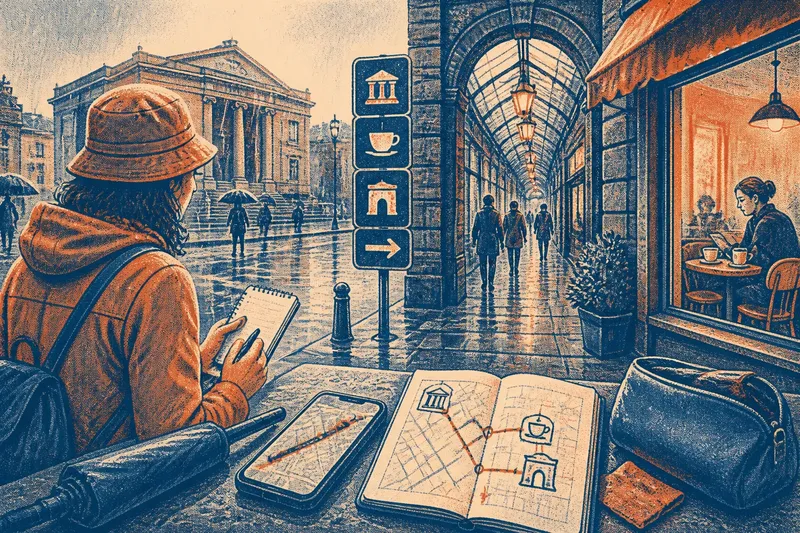
You reach the museum entrance as rain begins to stripe the pavement, and the café you meant to visit is on the other side of an exposed square. Planning a rainy city afternoon is less about dodging every drop than checking which doors, streets and indoor spaces will actually be available.
For an invented afternoon in a city centre, suppose you have a phone map, a small notebook and a few hours, with showers expected but their timing uncertain. Your aim is to visit a gallery, have a proper sit-down pause and see a covered passage, while avoiding a route that depends on one venue staying open.
What should you check before choosing the route?
Start with the places that shape the outing, then check their practical details before linking them on a map. A gallery may require a timed booking; a public foyer may not admit visitors who are not using the building; a café can be busy or closed on a particular day.
- Check the gallery’s opening information; if it is open during your visit, keep it as the anchor, but if not, choose another confirmed indoor attraction.
- Check whether the café serves visitors and has seating; if it does, use it as the planned pause, but if access or seating is uncertain, identify another nearby place to sit.
- Check the covered passage’s public access; if visitors can enter, keep it as a sheltered link, but if access is restricted, route along a street with usable shopfront cover instead.
- Check the map for crossings and street closures; if the route is clear, use the direct connection, but if it is obstructed, select an open parallel street.
- Check the forecast shortly before leaving; if showers look likely, carry a hood or umbrella, but if conditions seem dry, still keep one indoor alternative in mind.
- Check the final stop’s connection to onward transport; if it is convenient, finish there, but if it is not, choose a closer ending that avoids a long exposed walk.
These checks are more useful than trying to predict the exact moment rain will start. They tell you which parts of the plan are dependable and which need an alternative.
How can you compare streets, not just distances?
A map’s shortest line may cross an open square or follow a street with little shelter. Compare the actual connections: look for arcades, covered passages, recessed doorways and places where you can step out of foot traffic to check directions.
Street-level imagery can help you recognise a building entrance or the shape of a junction, but it may not show current closures or access rules. Treat it as a clue, then rely on current signs and the venue’s own information where access matters.
For the invented afternoon, the gallery, café and passage sit in the same central district. The map offers a direct crossing through an exposed square and a slightly less direct street with shopfront overhangs. Choosing the latter means the traveller can reach the café without making the square the unavoidable centrepiece of the outing.
How should the indoor stops fit together?
Give each indoor stop a different job. The gallery supplies the main visit; the café offers a seat and a chance to decide whether to continue; the covered passage provides a sheltered connection rather than another appointment to hurry towards.
Check the entrance as well as the interior. A place can look welcoming on a map yet have access restrictions, awkward steps or no public seating. If comfort or accessibility affects your choice, check directly with the venue and choose an alternative that suits your needs.
It is not worth the effort to build an elaborate chain of backup venues for every shower. One confirmed indoor pause and one practical alternative are usually easier to remember and manage.
What is sensible to carry?
Choose a hood or compact umbrella according to your preference, shoes that feel secure on wet paving, and a small cloth if rain tends to obscure your glasses or phone screen. Keep tickets and anything you need to reach in a pocket or bag compartment that is easy to access.
A light water-resistant bag cover can help protect notebooks or spare layers. There is little benefit in packing a separate gadget for every possible weather problem; extra equipment can become another thing to carry through narrow entrances and crowded rooms.
What should you do if the weather or opening plan changes?
Use current conditions to choose between options rather than trying to preserve the original sequence. If rain is manageable, continue to the next stop; if a downpour makes the crossing unpleasant, use the confirmed indoor place or shorten the outing.
Say the invented traveller’s starting plan is a gallery visit, a café pause and a covered passage, with the gallery confirmed open and the café’s seating uncertain. They check the café’s current information before leaving, find that it is not serving visitors that afternoon, and choose a nearby public tearoom instead after confirming it welcomes customers. When heavier rain begins outside the gallery, they take the covered passage to the tearoom, sit down, then decide from the window whether the final walk is comfortable. The observable result is a visit with the gallery and sheltered connection intact, while the uncertain café has been replaced before it could disrupt the afternoon.
Which rainy city afternoon questions come up most often?
Should you rely on a covered passage?
Only if you have checked that it is open to the public and accessible at the time you plan to use it. If that is unclear, keep a street-level alternative rather than treating the passage as essential.
Is a café or a museum better as the main indoor stop?
A museum or gallery gives the outing a clear destination, while a café is usually better for sitting down and reassessing conditions. Choose according to the purpose of the visit, and confirm access or opening details for whichever place matters most.
What if the forecast changes after you leave?
Check a current forecast if convenient, but let nearby confirmed places shape your decision. If rain intensifies, shorten the next exposed link or head to shelter; if it eases, continue along the route you already checked.
Should you keep a rainy-day plan on your phone?
A saved map pin or short note can help if you are unfamiliar with the area, especially when you need to find a confirmed entrance quickly. Keep the note simple: the next stop, its access detail and one alternative are enough.
What makes the route useful when rain keeps changing?
A rainy city afternoon works best when its essential details are checked and its alternatives are easy to reach. Knowing which entrance is public, where you can sit and which street avoids an exposed crossing can matter more than drawing a perfect line between attractions.
Use the phrase rainy city afternoon as a prompt to check access, shelter and the journey onwards, not as a demand to follow a fixed itinerary. When those details are clear, you can spend less attention on rescuing the plan and more on noticing the city through its windows, arcades and wet streets.